Jointli Resources
24 August 2026
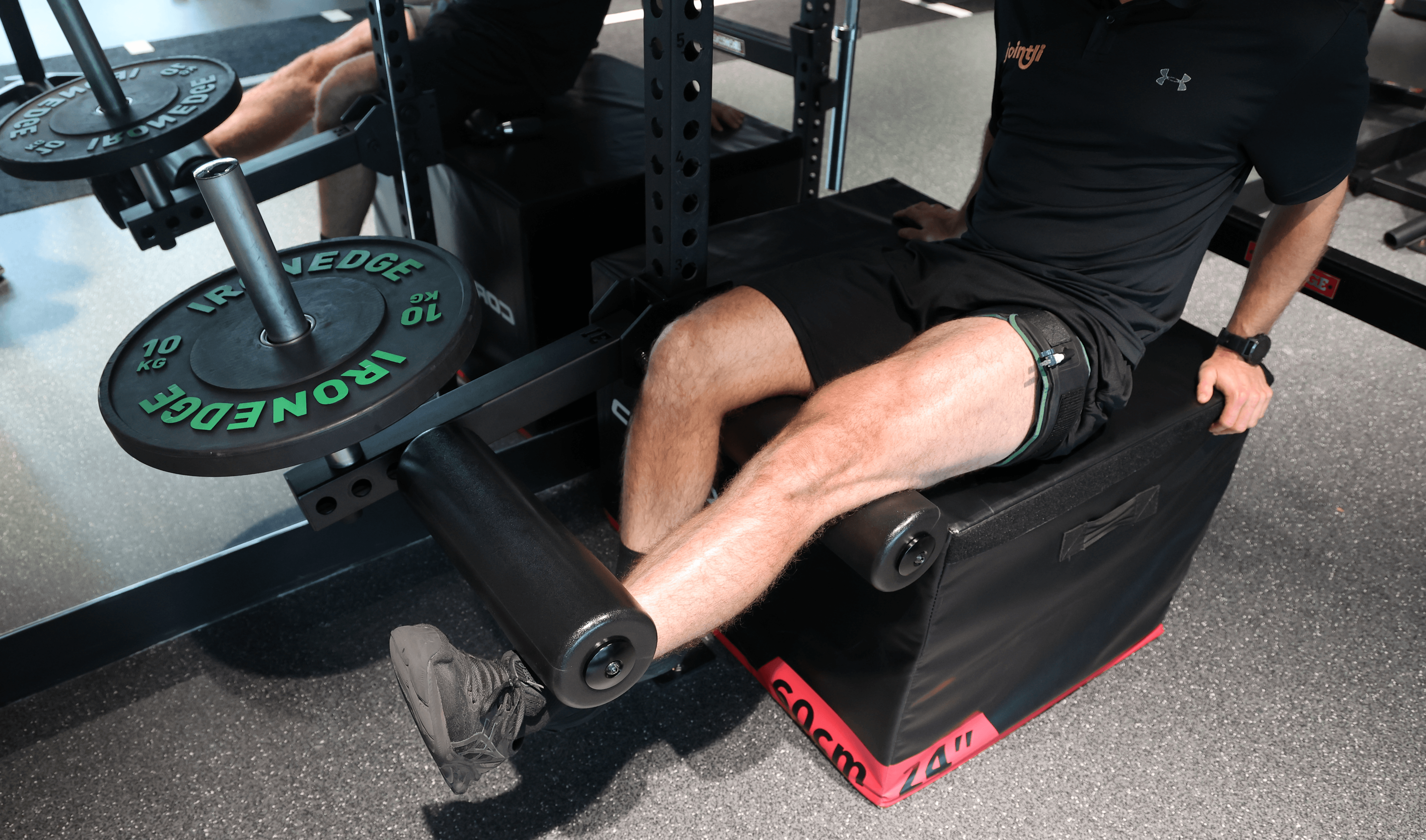
BFR training or often also referred to as occlusion training is a method of strength training that
utilises equipment to partially restrict the blood supply to the muscles targeted in exercise.
The simplest form of BFR training involves wearing a cuff in the upper arm or upper leg set at individualised specific occlusion levels. These levels can be adapted based on the individual and targeted response aiming for. These cuffs are worn throughout the entire time during exercise or more specifically rehabilitation.
While BFR is a great additional tool that can be used during rehabilitation, there are some contraindications for its use. Those who have a medical history of peripheral artery disease, hypertension, blood clotting disorders and peripheral neuropathy may not be suitable for its use (Australian Institute of Sport, 2021). Prior to BFR application at Jointli all patients will complete a pre screening questionnaire which includes a comprehensive medical history.
BFR is a low risk form of training, to which post people carry very low risk of contraindicators however certain medical conditions may
limit its use.
BFR is a great tool to use throughout early stage rehabilitation. Especially following knee orthopaedic surgeries as it allows you to train at lower intensity with the added benefits similar to working at higher strength intensities.
Early stage post surgery pain, swelling, inhabitation and post surgery protocols may limit your ability to complete rehabilitation at high intensities needed to elicit strength improvements.
BFR is best used through consultation with your rehabilitation specialist. Their assistance in the prescription,
use, settings and suitability should all be considered when utilising this training method.
BFR can also be used during aerobic endurance prescription to improve cardiorespiratory endurance. Typical use here is application of the BFR training cuffs on the upper thigh during a cycling session targeted and aerobic conditioning. BFR has been extensively researched to determine the benefits and best utilisation.
BFR training is a tool that can help you get ahead during your rehabilitation. High intensity strength training is best practice when trying to improve strength following injury, but following surgery or after acute injuries its not practical or possible to train at high intensities from the beginning.
Following injury you need to respect tissue healing, reduce your load so working at lower intensity might be more suitable. Therefore why not work smarter not harder, use BFR training to get similar effects as working at higher strength intensities.
BFR could also be used along the rehabilitation journey when treating lower limb tendinopathies. Tendon injuries can be irritable with strong pain but require high intensity strength to make tendon improvements, there BFR could assist with pain reduction and strength gain.
References:
Australian Institute of Sport, Blood Flow Restrictions Guidelines. 2021
Hughes, L., Paton, B., Haddad, F., Rosenblatt, B., Gissane, C. and Patterson, S.D. (2018). Comparison of the acute perceptual and blood pressure response to heavy load and light load blood flow restriction resistance exercise in anterior cruciate ligament reconstruction patients and non-injured populations. Physical Therapy in Sport, 33, pp.54–61. doi:10.1016/j.ptsp.2018.07.002.
Hughes, L., Patterson, S.D., Haddad, F., Rosenblatt, B., Gissane, C., McCarthy, D., Clarke, T., Ferris, G., Dawes, J. and Paton, B. (2019). Examination of the comfort and pain experienced with blood flow restriction training during post-surgery rehabilitation of anterior cruciate ligament reconstruction patients: A UK National Health Service trial. Physical Therapy in Sport, 39, pp.90–98. doi:10.1016/j.ptsp.2019.06.014.
NEW PROGRAM!
We are thrilled to announce the launch of our Clinical Pilates program, designed to bridge the gap between rehabilitation and
general fitness. Unlike standard Pilates classes, this program is led by qualified physiotherapists who tailor each exercise
to your specific injury history and movement goals. Join us to experience a targeted path to better health and physical
well-being.