
Home › Resources › Blog › Should I Feel Pain After Exercising? Understanding Soreness and Building Strength
Pain when exercising does not mean you are causing any mechanical damage to the knee joint. Pain is a part of the process of building capacity. As your capacity improves, your pain will decrease as the tasks you were once doing will now become easier due to increased strength in the leg muscles. Ensuring you do not push past a certain level of pain is important. Use the diagram below to help guide you what level of pain is acceptable and what isn’t.
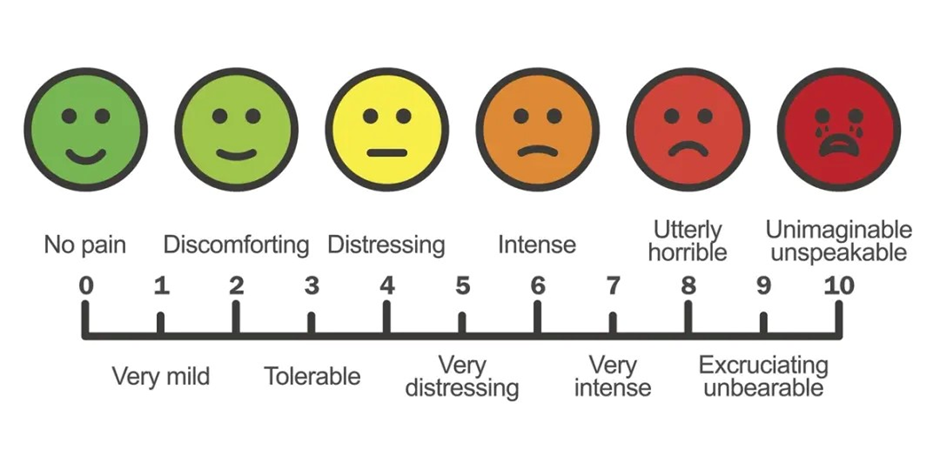
A pain level of less than 5/10 is desired when exercising.
A pain level of less than 3/10 is desired after exercising.
You will feel soreness after your program and that is completely normal. This soreness is your muscles adapting to the new stimulus and responding by repairing the muscle and becoming stronger for the next time you exercise. Ensuring you give your muscles enough rest time is very important.
Delayed onset muscle soreness (DOMS) or Exercise Induced Muscle Damage (EIMD) also known as 'muscle fever'. It is a sore, aching, painful feeling in the muscles after unfamiliar and unaccustomed intense exercise. DOMS is thought to be due to temporary muscle damage and inflammation.
Exercise Consistency: How many often should I be completing my program?
2-3 times per week. Make sure to give yourself at least 1 day break between each program session to ensure your muscles have enough time to recover. Muscles and tendons take time to adapt and build stronger. The program may start slowly with small steps towards your goals but as time moves on and you build a solid foundation of strength, you will be able to build upon your strong foundation and reach your goals much sooner as your capacity to do more exercise grows and grows.
Importance & Reasons Why
The great thing about strength training is that you don’t need start it young. You can start at anytime in your life, research points towards individuals that are even over 90+ years can see 30-170% improvements of their strength via strength programming over 12 weeks.
NEW PROGRAM!
We are thrilled to announce the launch of our Clinical Pilates program, designed to bridge the gap between rehabilitation and
general fitness. Unlike standard Pilates classes, this program is led by qualified physiotherapists who tailor each exercise
to your specific injury history and movement goals. Join us to experience a targeted path to better health and physical
well-being.